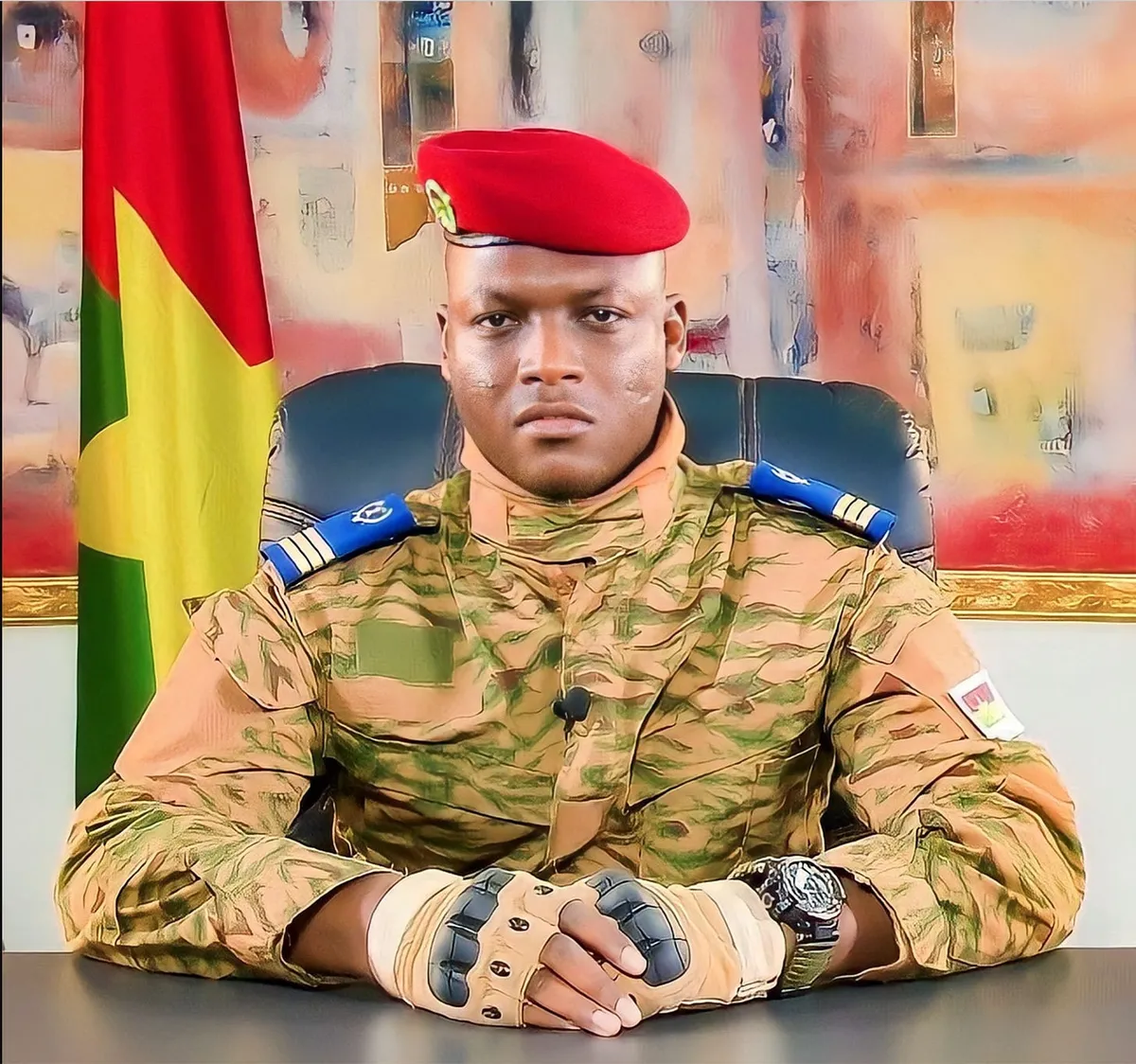
In a startling announcement, Captain Ibrahim Traoré, the military leader of Burkina Faso, has declared that citizens must “forget about democracy.” This statement comes amid a broader context of political upheaval in the country, where the junta has dissolved political parties and postponed elections indefinitely.
Traoré, who seized power in September 2022 after toppling another junta, has framed his government’s consolidation of power as a necessary measure for national security. He stated during a televised discussion, “Democracy kills,” emphasizing his belief that the democratic process is not suitable for Burkina Faso.
The junta’s recent actions have effectively nullified any planned democratic transition, extending the transition period by five years. This move has raised concerns among citizens and international observers alike, particularly given the country’s ongoing struggles with nearly a decade of jihadist insurgencies.
Before the coup, Burkina Faso had a vibrant political landscape with more than 100 political parties, including 15 that were represented in parliament following the 2020 elections. However, the current regime’s crackdown on political opposition has led to a significant reduction in political pluralism.
In addition to dissolving political parties, the junta has restricted international media access and expelled journalists, further consolidating its grip on power. The United Nations has condemned these actions, highlighting the regime’s moves against political parties as detrimental to the country’s democratic aspirations.
Traoré’s comments reflect a broader sentiment within the junta that prioritizes security over democratic governance. As the military continues to assert its authority, the future of democracy in Burkina Faso remains uncertain.
First reactions to Traoré’s statements have been mixed, with some citizens expressing frustration over the loss of democratic rights, while others support the junta’s focus on stability and security. The situation continues to evolve, and details remain unconfirmed regarding the potential for future political reforms.
As Burkina Faso navigates this complex political landscape, the implications of Traoré’s rejection of democracy will likely resonate throughout the region, influencing both domestic and international responses to the junta’s governance.