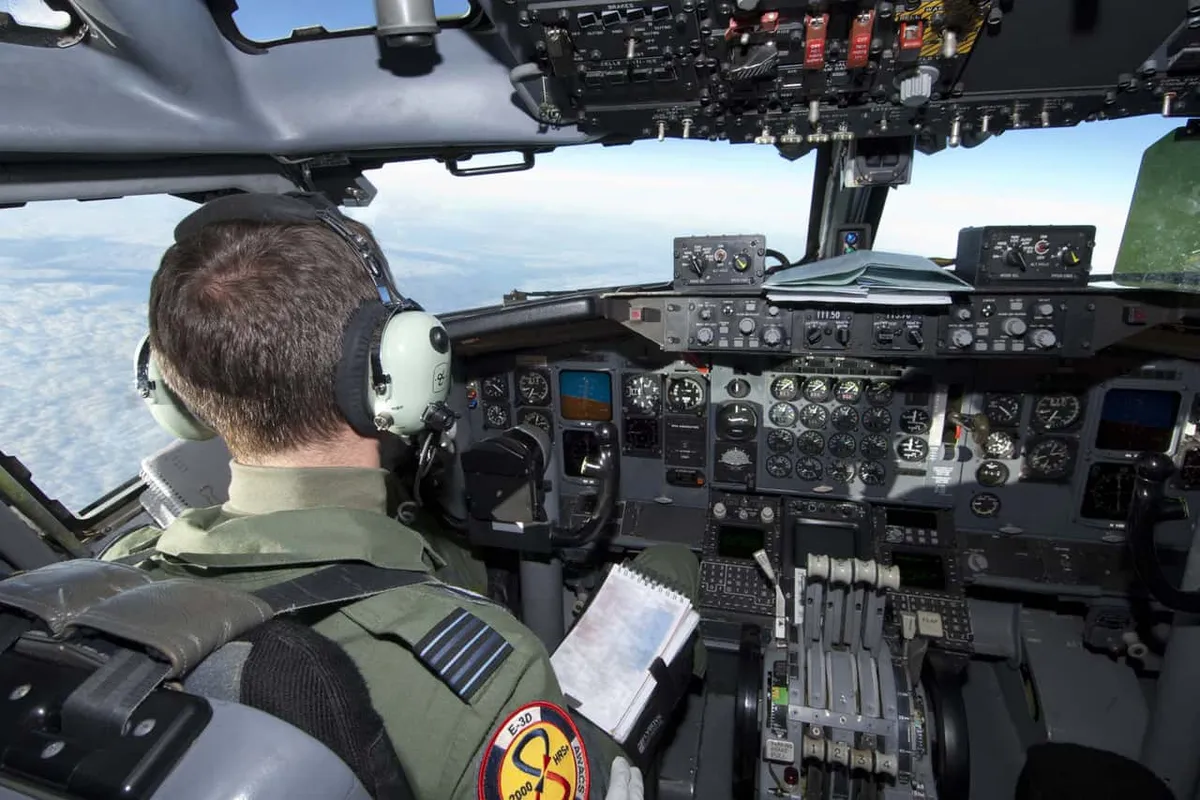
On March 30, 2026, the E-3 Sentry aircraft was destroyed in an Iranian strike on Prince Sultan Air Base in Saudi Arabia. This incident marks a significant escalation in tensions between Iran and the United States, particularly in the context of ongoing hostilities that began with the war on February 28.
The E-3 Sentry, a vital component of US military operations, has been in service since the first aircraft joined the Air Force fleet in 1978. Known for its ability to track around 600 targets simultaneously, the loss of this aircraft is seen as a serious blow to US surveillance capabilities.
At least 10 US service members were injured in the attack, raising concerns about the safety and security of military personnel stationed in the region. The E-3 Sentry, based on the Boeing 707 commercial airframe, provides all-altitude and all-weather surveillance, making it critical for managing battle space and tracking threats from hundreds of kilometers away.
Experts have noted that Iran has been targeting US assets in Gulf countries since the onset of the conflict, with a particular focus on systems that enhance surveillance and operational effectiveness. Retired US Air Force Colonel John Venable remarked, “Targeting the E-3G AWACS in particular is a big deal,” highlighting the strategic importance of the aircraft.
The US Air Force currently operates a fleet of 17 E-3 Sentry aircraft, which cost around $540 million each. The destruction of one of these aircraft raises questions about the vulnerability of US military assets and the effectiveness of current defense strategies.
Cedric Leighton, a military analyst, stated, “The loss of the AWACS is a serious blow to (US) surveillance capabilities,” underscoring the critical role that the E-3 plays in modern warfare.
As the situation develops, it remains unclear how the US allowed the E-3 to become vulnerable to such an attack. Details remain unconfirmed regarding the exact number of US service members injured in the strike.
The implications of this event extend beyond immediate military concerns, as it may influence future US engagement strategies in the region and the ongoing assessment of the aging E-3 fleet.
In summary, the destruction of the E-3 Sentry aircraft not only impacts current military operations but also raises significant questions about the future of US surveillance capabilities in a volatile geopolitical landscape.