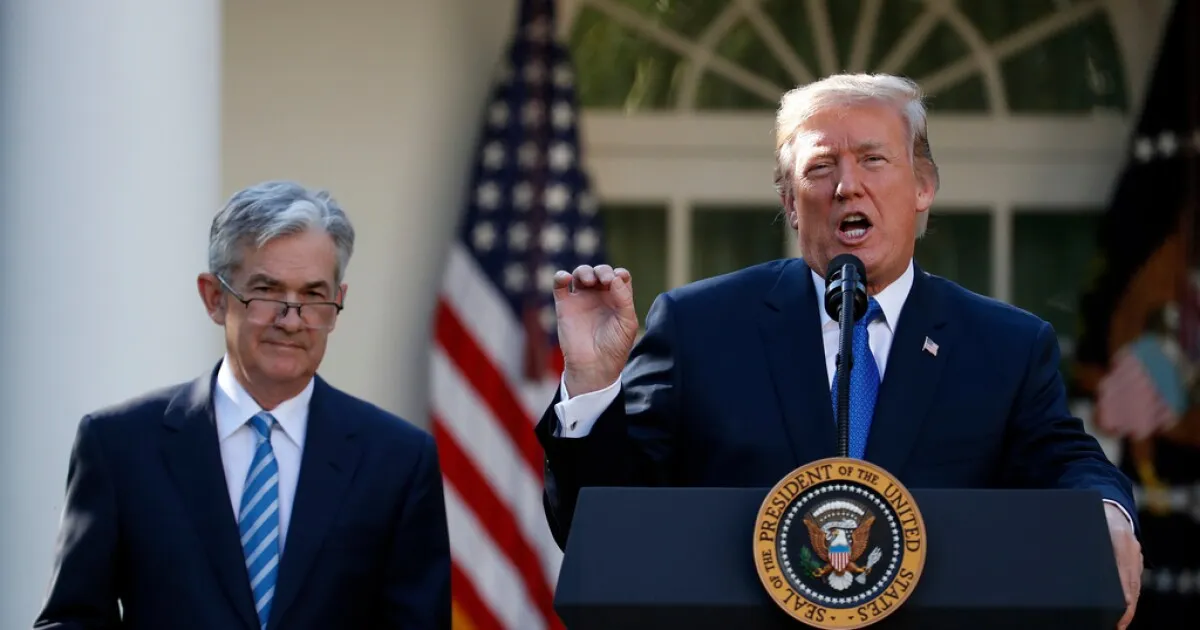
“No,” stated Federal Reserve Chair Jerome Powell when asked if he would resign if requested by President-elect Donald Trump. This firm response comes as Trump intensifies pressure on Powell to lower interest rates ahead of the Federal Reserve’s upcoming meeting next week.
Trump has been vocal about his dissatisfaction with Powell’s leadership, criticizing him for not acting swiftly enough to reduce interest rates. In a recent statement, Trump remarked, “Where is the Federal Reserve Chairman, Jerome ‘Too Late’ Powell, today? He should be dropping interest rates, IMMEDIATELY, not waiting for the next meeting!” This reflects the growing tension between the incoming administration and the Federal Reserve.
The backdrop to this situation includes the Federal Reserve’s recent actions in response to inflation, which soared to over 9% in 2022 before dropping below 3%. In an effort to combat rising prices, the Federal Reserve raised interest rates to their highest level in decades.
Currently, the consumer price index has risen by 2.4% in the 12 months ending in February, indicating ongoing inflationary pressures. Additionally, mortgage rates, which are significantly influenced by the Federal Reserve’s policies, currently average around 6.11% for a 30-year fixed mortgage.
Powell is expected to remain in his position as chair until May 2026, although Trump has nominated Kevin Warsh as a potential replacement. The Federal Reserve’s primary goal remains to balance low inflation with continued employment gains, a challenging task given the current economic climate.
In a related development, a U.S. judge, James Boasberg, recently blocked the Department of Justice’s investigation into the Federal Reserve, stating that the subpoenas issued were for an improper purpose. Boasberg noted, “There is abundant evidence that the subpoenas’ dominant (if not sole) purpose is to harass and pressure Powell either to yield to the President or to resign and make way for a Fed Chair who will.”
This judicial decision adds another layer of complexity to the ongoing dynamics between the Federal Reserve and the executive branch.
As the Federal Reserve prepares for its next meeting, all eyes will be on Powell and the decisions that will shape the economic landscape in the coming months.