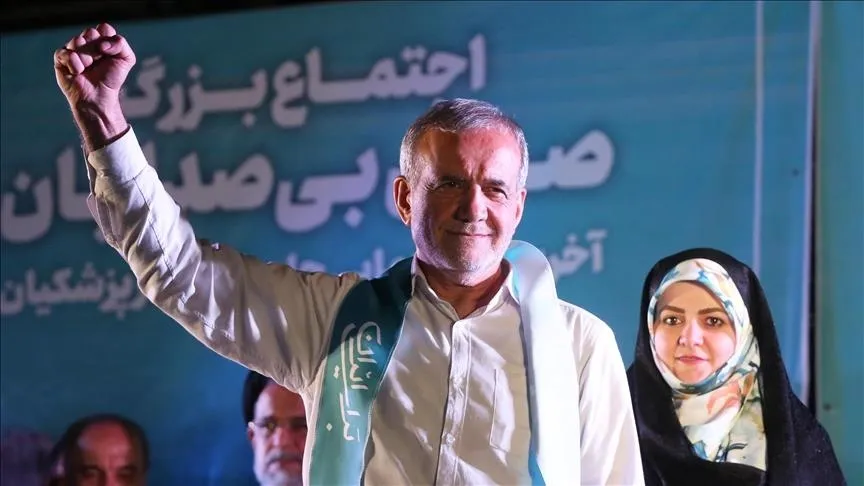
Iranian President Masoud Pezeshkian Announces New Policy on Attacks Against Neighbors
On March 7, 2026, Iranian President Masoud Pezeshkian announced a significant shift in Iran’s military policy regarding its neighboring countries. In a statement that has drawn attention across the Middle East, Pezeshkian declared that Iran would no longer target neighboring nations unless they were attacked first by the United States or Israel.
This announcement comes in the wake of escalating tensions in the region, particularly following recent military actions by Iran’s Islamic Revolutionary Guards Corps (IRGC), which targeted an oil tanker named Prima in the Gulf. The closure of the Strait of Hormuz, a crucial waterway for global oil transport, has resulted in approximately 3,000 vessels and 20,000 seafarers being stranded in the Middle East. The closure also affects about 20 percent of the world’s oil supply, raising concerns about global energy security.
Pezeshkian’s statement included an apology to neighboring countries for previous strikes, indicating a desire to de-escalate tensions. “I see am necessary to apologise to neighbouring kontris wey dey chop attack,” he said, reflecting a shift in tone from previous rhetoric. The Iranian interim council has approved this motion, signaling a formal change in Iran’s approach to its regional relations.
Despite the ongoing conflict and the recent killing of Supreme Leader Ali Khamenei in US and Israeli strikes, Iran continues to maintain regular governance. The IRGC has reiterated its commitment to respecting the interests and national sovereignty of neighboring countries, stating, “Following the statements of the president, the armed forces once again declare that they respect the interests and national sovereignty of neighbouring countries.” This statement underscores the military’s alignment with the new policy direction.
In addition to the military implications, the closure of the Strait of Hormuz has led to significant disruptions in international shipping and air travel. Dubai International Airport has suspended all operations due to the ongoing attacks, further complicating the situation for travelers and businesses in the region.
The Iranian president’s announcement may be seen as an attempt to stabilize the region and reduce the risk of further military confrontations. However, the effectiveness of this new policy remains to be seen, as the geopolitical landscape in the Middle East is complex and fraught with historical animosities.
As the situation develops, reactions from neighboring countries and international observers will be crucial in determining the future of Iran’s relations with its neighbors. Details remain unconfirmed regarding how this policy will be implemented and its potential impact on regional stability.