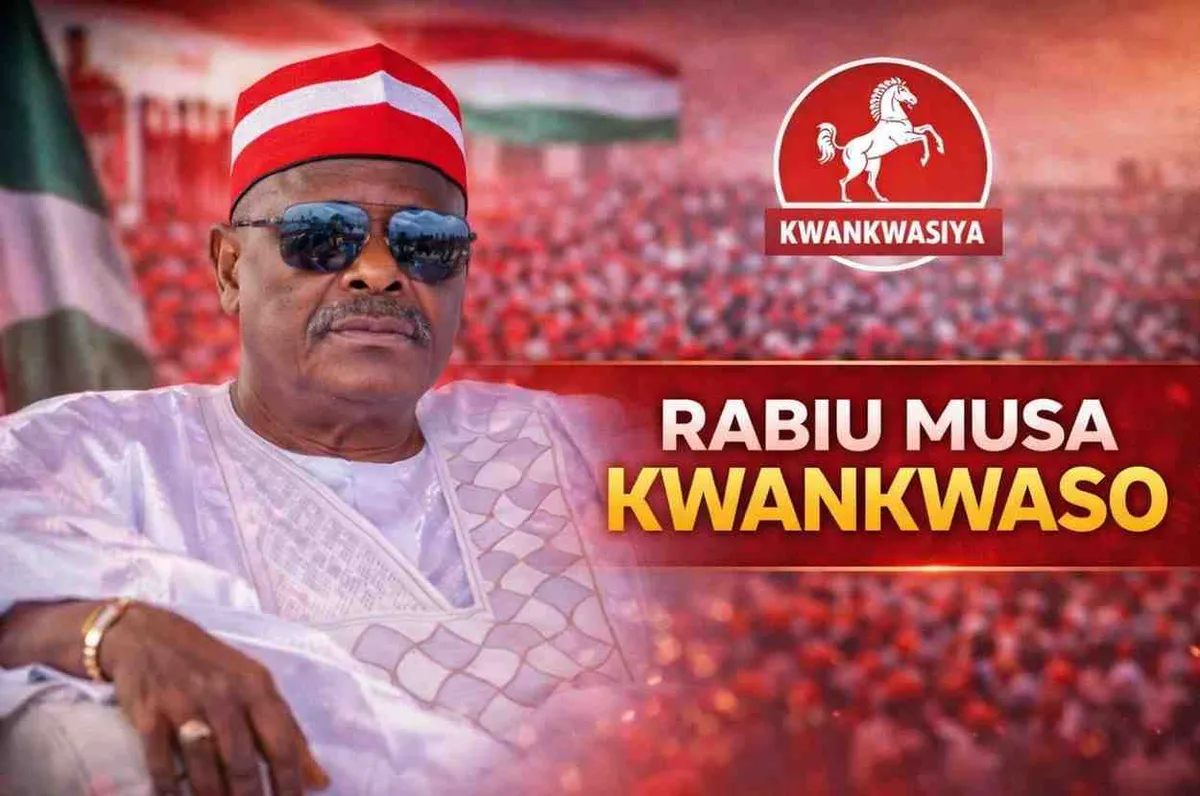
Rabiu Kwankwaso, a prominent figure in Nigerian politics and a founding member of the New Nigeria People’s Party (NNPP), has made headlines with his recent political realignment. On March 28, 2026, he announced his resignation from the NNPP, citing a need for political realignment. This move comes after Kwankwaso’s notable performance in the 2023 elections, where he secured over one million votes and finished fourth as the presidential candidate for the NNPP.
Following his resignation, Kwankwaso formally joined the African Democratic Congress (ADC) in a registration event held in Kano, attended by ADC chieftains and supporters from the Kwankwasiyya Movement. “I wish to formally announce my resignation from the New Nigeria People’s Party (NNPP) with immediate effect,” Kwankwaso stated during his announcement.
The shift to the ADC is seen as a significant boost for the opposition party, which is looking to strengthen its position ahead of the upcoming 2027 elections. Bolaji Abdullahi, a spokesperson for the ADC, remarked, “Di former Kano State Governor, Rabiu Musa Kwankwaso, dey join di ADC witout pre-condition,” highlighting the unencumbered nature of his new affiliation.
Moreover, discussions among Kwankwaso’s supporters suggest a potential ticket with Peter Obi for the 2027 elections, which could reshape the political landscape in Nigeria. Yunusa Tanko, a political analyst, noted, “Na me first start dis particular tok about Obi-Kwankwaso ticket. E be like say na im be di most acceptable idea if you do public poll, e dey obvious.” This indicates a growing interest in collaborative efforts among opposition leaders.
However, uncertainties remain regarding Kwankwaso’s future role within the ADC. Details remain unconfirmed about whether the ADC has guaranteed him a presidential or vice-presidential ticket for the upcoming elections. This ambiguity adds an element of suspense to the political narrative as observers await further developments.
Kwankwaso’s move is not just a personal shift but a strategic maneuver that could influence the dynamics of opposition politics in Nigeria. As he embarks on this new chapter with the ADC, the implications of his decision will be closely monitored by political analysts and supporters alike.