Introduction
Taraweeh prayer holds immense significance during the holy month of Ramadan, serving as a means for Muslims to seek spiritual closeness to Allah. This special nightly prayer, which is performed after the obligatory Isha prayer, plays a crucial role in enhancing the spiritual experience of believers during this sacred month. With an increasing number of Muslims worldwide, understanding the essence and practice of Taraweeh prayer is more relevant than ever.
The Practice of Taraweeh
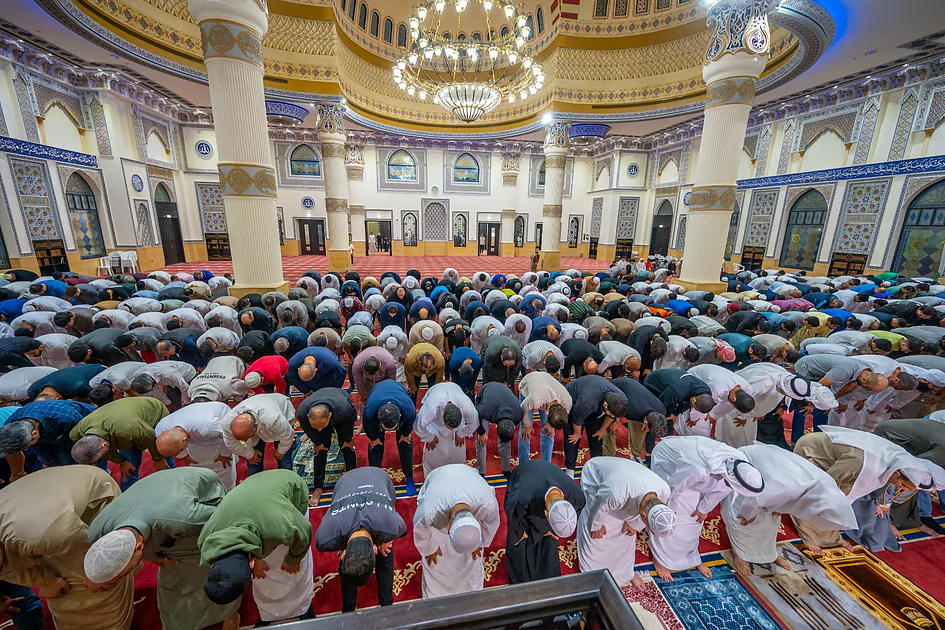
Taraweeh consists of additional prayers and can vary in length but is traditionally 8 or 20 units (rakats). It is usually performed in congregation at mosques, though it can also be done individually at home. The prayer involves the recitation of Qur’an and is designed to encourage Muslims to engage more deeply with their faith. Numerous mosques across Nigeria organize daily Taraweeh prayers, attracting large crowds of worshippers eager to experience this communal and spiritual activity. These prayers foster a sense of community and shared devotion among participants, which is an essential aspect during Ramadan.
Significance of Taraweeh Prayer
The significance of Taraweeh is not limited to its performance; it embodies the spirit of Ramadan itself. Engaging in Taraweeh is a way for Muslims to reflect on their relationship with the Qur’an, as repetitive recitation helps reinforce their connection to the divine message. Moreover, it serves as an avenue for forgiveness and purification, as it is believed that those who engage in Taraweeh prayers will have their sins forgiven. It’s also a form of self-discipline as it often requires sacrifices of time and comfort during the long nights of Ramadan.
Current Trends and Observations
In 2023, the evolution of technology has also influenced the approach to Taraweeh prayers, with many mosques offering live-streamed sessions for those who cannot attend in person. Additionally, social media platforms have seen an increase in discussions and educational content related to Ramadan, helping younger generations understand the importance of Taraweeh prayer and encouraging them to participate actively. Leaders in the Muslim community continue to highlight the need for unity and support during Ramadan, further emphasizing the communal aspect of Taraweeh.
Conclusion
Taraweeh prayer remains a vital component of the Ramadan experience for millions of Muslims around the world. Its significance goes beyond mere ritual; it strengthens community bonds, enhances personal faith, and provides an opportunity for spiritual reflection. As Ramadan continues to inspire individuals, both young and old, the practice of Taraweeh encourages believers to deepen their relationship with their faith and foster a sense of belonging within the larger Muslim community. Moving forward, it is essential for communities to maintain and adapt their practices to ensure that the essence of Taraweeh prayer remains alive for future generations.