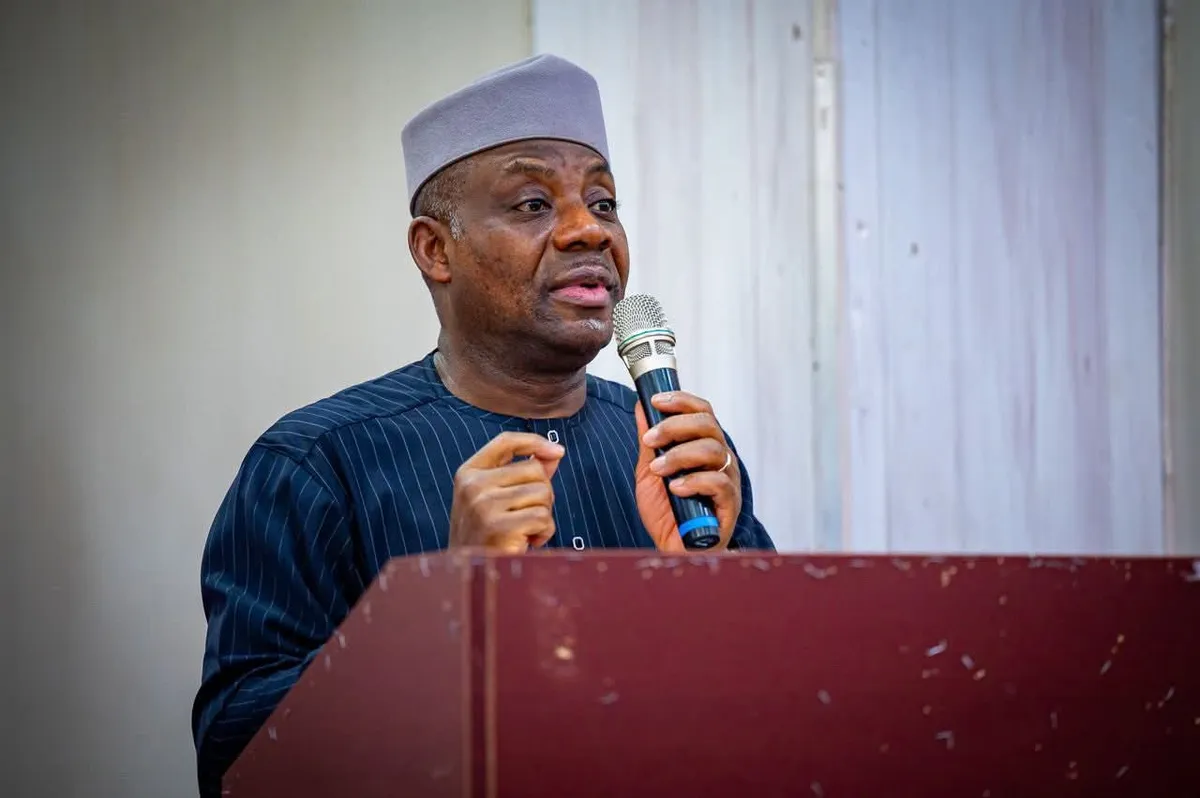
“The existing entrance examination will be gradually eliminated and substituted with a continuous assessment model,” stated Tunji Alausa, Nigeria’s Minister of Education. This significant shift in the educational landscape aims to replace the Junior Secondary School Common Entrance Examination with a more comprehensive evaluation system.
The Federal Government plans to implement a nationwide student tracking framework anchored on a Learner Identification Number. This new system is designed to allow for continuous assessment of pupils’ academic performance from their early primary school years.
Currently, Nigeria has over 50,000 public primary schools with an estimated 23 million pupils enrolled. However, only slightly above 3 million of these pupils proceed to junior secondary schools within the public system. The transition from primary to junior secondary education has been a longstanding concern due to the significant number of pupils who fail to progress.
The continuous assessment records will follow pupils throughout their academic journey, including during school transfers. This approach is designed to ensure continuity in academic records and provide a clearer picture of each learner’s development.
Furthermore, the government plans to assign a unique Learner Identification Number to every child from primary school entry. This system aims to detect and investigate cases of student dropouts or failures to transition between educational levels.
In addition to these changes, the Federal Government is also taking steps to revive the school feeding programme to increase enrolment and retention rates among students. These proposed changes are part of a wider strategy to reform the education sector in Nigeria.
As the transition unfolds, the education ministry anticipates that the new continuous assessment model will enhance access, monitoring, and progression within the educational framework.
Details remain unconfirmed regarding the exact timeline for the implementation of these reforms, but the focus remains on improving the educational outcomes for millions of Nigerian children.