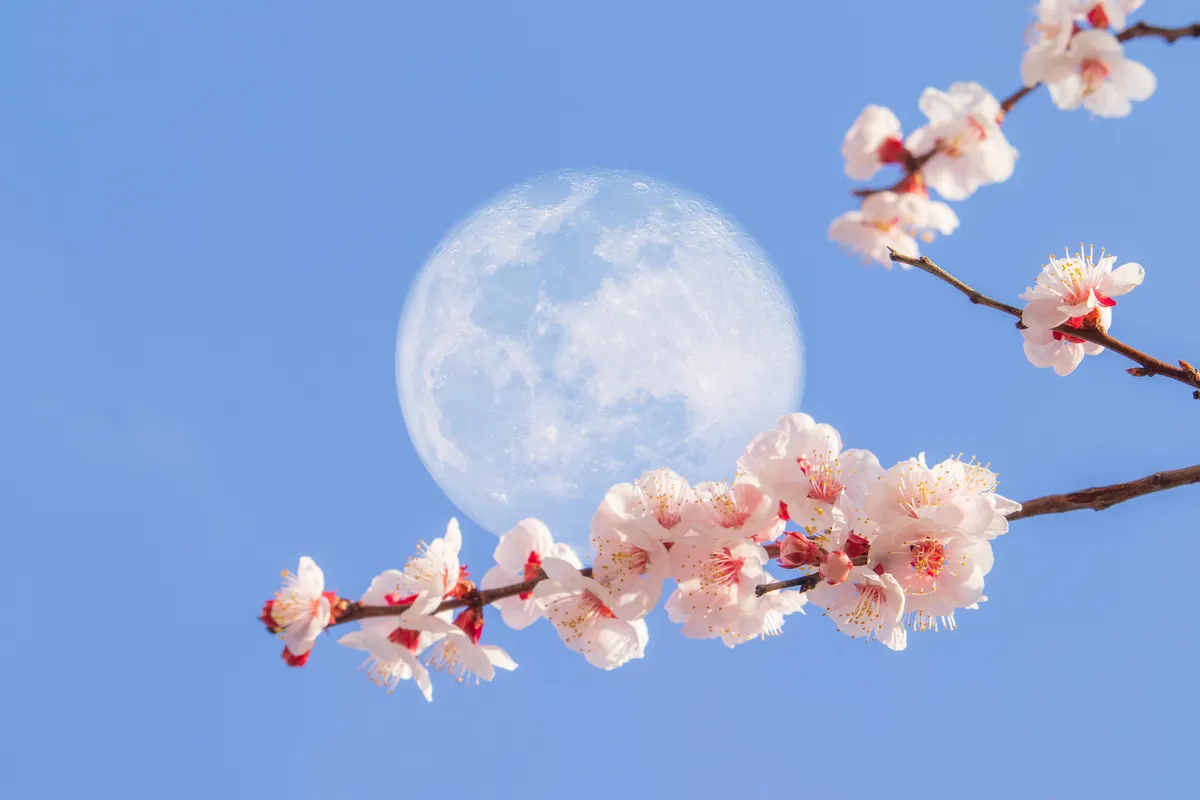
In May 2026, skywatchers will witness a remarkable event: two full moons, with the Flower Moon peaking at 18:23 on May 1, followed by a rare Blue Moon on May 31.
The Flower Moon, named by the Algonquin peoples, symbolizes the blooming of flowers during this time of year. It is also referred to as the Month of Flowers in various traditions. This year, it will appear as a micromoon, meaning it will look slightly smaller than usual due to its position in orbit.
What else should you know about these full moons? The Blue Moon is notable for being the second full moon within a single lunar month—a phenomenon that occurs infrequently. It will reach peak illumination at 4:45 A.M. on May 31.
The names given to full moons often reflect natural events or seasonal changes. For instance, May’s full moon has also been called the Budding Moon, Leaf Budding Moon, and Planting Moon, showcasing its connection to agricultural practices among Native American cultures.
Christina Ruddy notes that the term “Flower Moon” has been attributed to Algonquin peoples. This highlights how indigenous cultures have long observed lunar cycles and their relationship with nature.
Historically, many cultures have developed names for full moons based on their unique environmental contexts. The Old Farmer’s Almanac states that these names originate from various sources, including Native American and Colonial American traditions.
As observers look forward to these celestial events, they might wonder what rituals or beliefs are associated with them. Some traditions suggest that washing clothes during a full moon can lead to them not lasting long—a superstition that connects lunar phases with daily life.
The upcoming Flower Moon and Blue Moon offer more than just visual spectacles; they invite us to reflect on our connection to nature and its cycles. As we prepare for these events, let’s embrace the beauty they bring and consider their cultural significance.