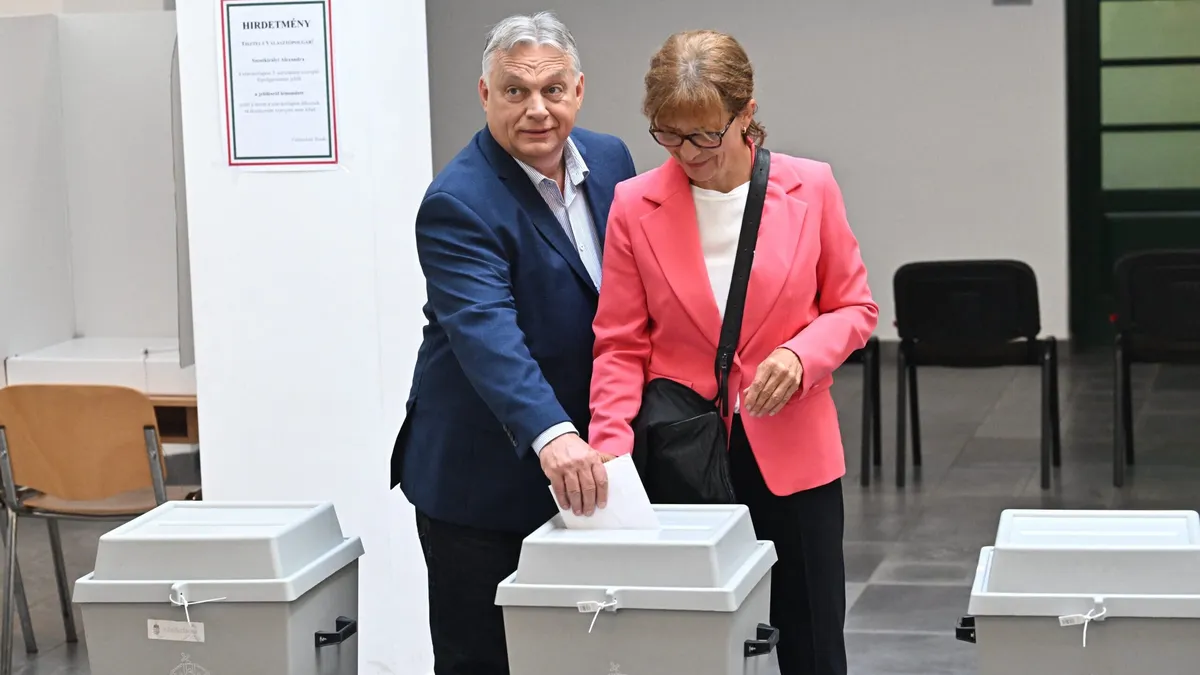
What does Viktor Orban’s ousting mean for Hungary’s future? The recent election results indicate a significant shift in the political landscape, as Hungarians have voted out their long-serving, far-right Prime Minister after 16 years in power.
Peter Magyar’s Tisza party is set to receive 138 seats in Hungary’s 199-seat parliament, achieving a two-thirds majority. This outcome reflects a growing discontent with Orban’s leadership, particularly concerning his ties with Russia and his controversial decisions regarding European Union agreements.
The election witnessed a record turnout, showcasing the public’s engagement and desire for change. Magyar’s campaign was notably pro-EU, contrasting sharply with Orban’s increasingly unpopular stance within the EU, especially after he reneged on an agreement to provide Ukraine with a €90bn loan.
Orban, who was once a vocal opponent of Soviet occupation, has faced criticism for his authoritarian style of governance and his alignment with figures like Vladimir Putin. His administration’s policies have raised concerns among EU leaders, leading to strained relations.
The Tisza party’s victory marks a pivotal moment in Hungary’s political history, as it signals a potential shift towards more EU-friendly policies and governance. With the new majority, Magyar’s party is expected to implement reforms that could reshape Hungary’s international relations and domestic policies.
As the nation transitions to a new leadership, questions remain about the future direction of Hungary’s policies, particularly in relation to the EU and its commitments. The implications of this election will unfold in the coming months as the Tisza party prepares to take office.
Details remain unconfirmed regarding the specific policies that the new government will prioritize, but the electorate’s desire for change is clear. The political landscape in Hungary is poised for transformation as the Tisza party prepares to lead the country into a new era.