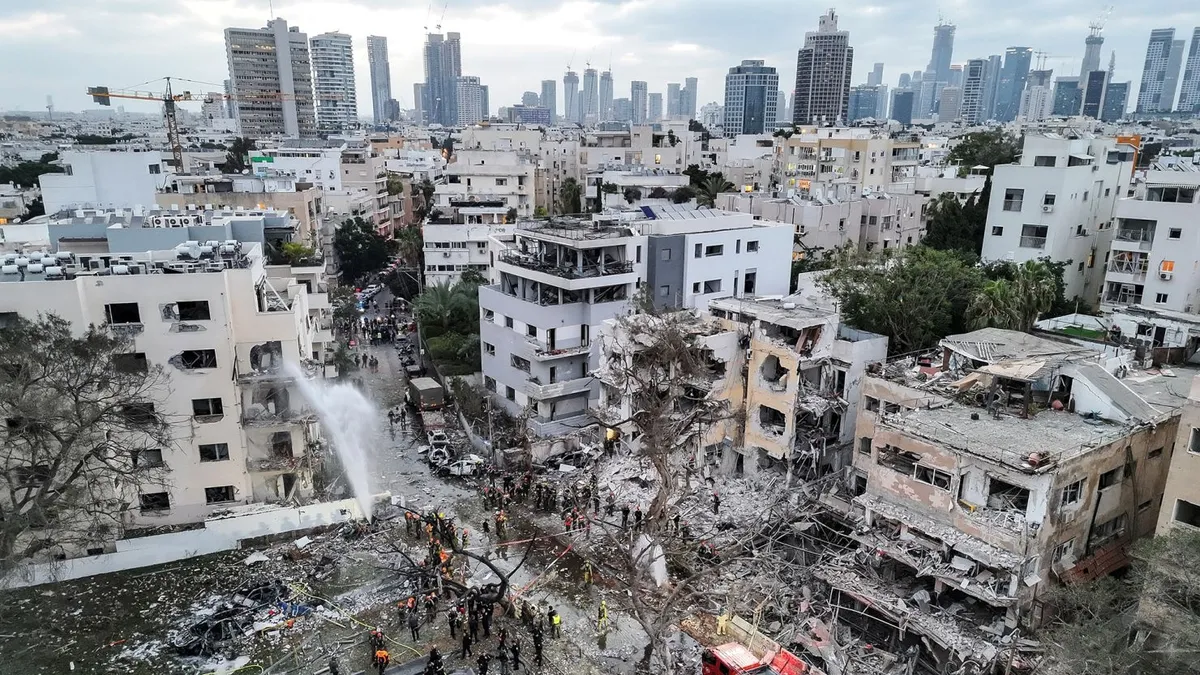
“More than 1,000 apartments in Tel Aviv are no longer fit for living,” declared Ron Huldai, the city’s mayor, encapsulating the stark reality faced by many residents.
The Iran War, which ignited on February 28, 2026, has wreaked havoc across the region. Following a series of Iranian missile and drone strikes targeting major Israeli cities—retaliation for extensive strikes on its own territory—Tel Aviv now bears visible scars of conflict.
This war has not only resulted in physical destruction but also financial devastation. Israeli officials estimate that the first 40 days of hostilities have cost around $17.5 billion. Nearly 30,000 Israelis have sought compensation for property damage, a staggering figure that underscores the war’s impact on everyday life.
That context matters because it helps us understand why negotiations between the US and Iran are crucial at this juncture. A ceasefire took effect on April 8, 2026, opening a window for dialogue. Yet, as Mohammad Bagher Qalibaf, Iran’s parliament speaker noted, “We have reached conclusions on some issues, but there are still major gaps on others.”
The complexity of these negotiations is heightened by ongoing disputes related to Tehran’s nuclear ambitions and control over the strategic Strait of Hormuz. The first round of talks was held in Pakistan—a setting symbolic of both hope and tension.
But what happens next? While progress has been made towards ending hostilities, significant hurdles remain. Qalibaf remarked pointedly that “Trump did not achieve his objective of regime change and destroying our offensive and missile capabilities. Iran is not Venezuela.” This statement reflects deep-seated mistrust and indicates that resolving these issues will require more than just dialogue—it demands tangible action.
In Tel Aviv, the consequences of this conflict are immediate and severe. Over 1,000 homes rendered uninhabitable is not just a statistic; it represents lives disrupted and futures uncertain. The Finance Ministry anticipates that compensation costs from the war could reach up to 6.5 billion shekels.
The war has also led to fluctuations in oil prices—an economic ripple effect felt globally—amid uncertainty in the strategically vital Strait of Hormuz.
As discussions continue between the US and Iran, the people of Tel Aviv watch closely. They hope for peace but remain acutely aware of the fragility surrounding these negotiations.