Introduction
The Federal Inland Revenue Service (FIRS) withholding tax is a crucial aspect of Nigeria’s tax system that impacts both individuals and businesses. It serves as a means for the government to collect income tax in advance on behalf of taxpayers, making it essential for promoting tax compliance and enhancing revenue generation. As businesses grow and evolve, understanding the implications and processes surrounding withholding tax becomes increasingly relevant.
What is FIRS Withholding Tax?
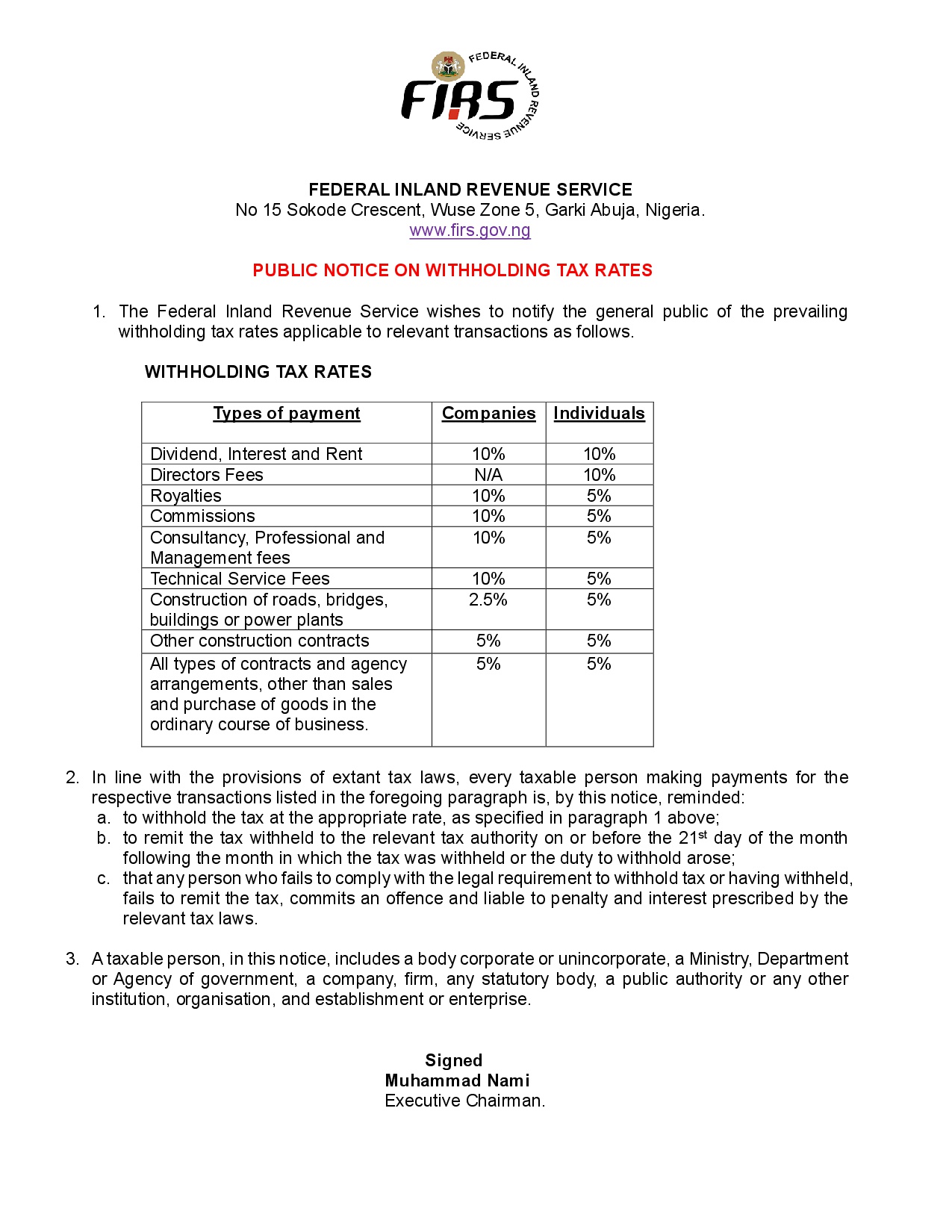
Withholding tax is a tax levied on payments made to individuals or businesses for goods and services rendered. This tax is deducted at the source and must be remitted to FIRS by the payer. The withholding tax system covers various payments, including consultancy fees, professional services, contract payments, and rent, among others. The rates for withholding tax vary based on the nature of the payment and the recipient’s status, such as individual or corporate entity.
Recent Developments in Withholding Tax Regulations
In 2023, FIRS introduced updates to the withholding tax regulations aimed at improving compliance and reducing tax evasion. Enhanced enforcement mechanisms have been put in place, including the use of digital platforms to monitor tax deductions and remittances effectively. Additionally, guidelines have been established to clarify the responsibilities of withholding agents, ensuring that all necessary payments are accurately calculated and reported.
The Importance of Compliance
Compliance with withholding tax regulations is vital for both taxpayers and businesses in Nigeria. Failure to withhold and remit the specified tax can lead to significant penalties and interest charges from FIRS. Furthermore, businesses that consistently comply with the regulations are likely to build a positive reputation with tax authorities, leading to better relationships and potential tax incentives in the long run.
Conclusion: The Future of Withholding Tax in Nigeria
As Nigeria continues to strive for economic growth and stability, the FIRS withholding tax system will play a pivotal role in enhancing the country’s revenue base. Ongoing reforms and increased awareness among taxpayers will be critical in improving compliance levels. For businesses, staying abreast of the withholding tax regulations and best practices is not just a legal obligation but also an integral part of strategic financial management. Moving forward, stakeholders must collaborate to streamline processes and ensure that the withholding tax system contributes effectively to Nigeria’s economic landscape.